

When Help Hurts
How Medical Ableism Shapes Care and Misunderstands Progress

Some of the most harmful medical encounters I have had were with providers who were convinced they were helping. Disabled people learn quickly that harm in healthcare does not always arrive as cruelty. Often, it shows up as certainty: certainty about what should be fixed, what counts as improvement, and whose goals matter most. For me, this pattern has played out most vividly in my long and fraught relationship with eye doctors.
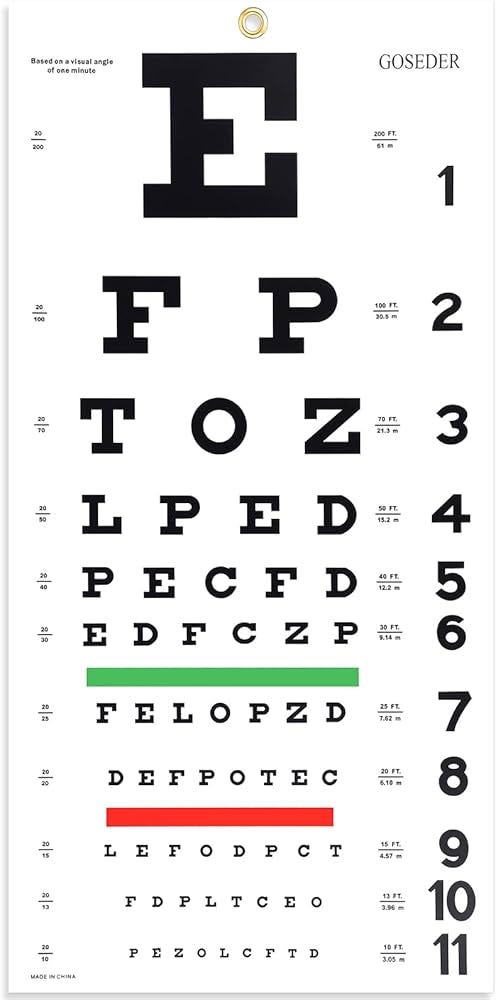
Disability scholars describe this dynamic as medical ableism, the systematic privileging of nondisabled norms, assumptions, and values within healthcare systems. In medical ableism, ideas about function and quality of life are treated as self-evident rather than contested, and care is organized around an imagined ideal instead of a patient’s lived priorities. It is most powerful not when providers intend harm, but when they are confident they are doing good.
Rather than recount the full arc of my experiences with medical ableism, from before my diagnosis through now, a timeline that includes both extraordinary care and profound disappointment, I want to focus on a single appointment I had last summer. One appointment that crystallizes so much of what is harmful, disheartening, and ableist in professional care that insists it is benevolent.
For context, I have a rare retinal disease. Rare diseases are defined as conditions affecting fewer than 200,000 people in the United States. In practice, this means that even within specialty fields, many clinicians have little familiarity with my condition or how to treat it. I have encountered truly extraordinary providers. UC Berkeley’s low vision clinic, for example, remains unparalleled in its care. But that level of expertise, thoughtfulness, and humility has not been the norm.
After moving to St. Louis, I knew I would need to establish eye care locally. I still have not found anyone who can manage both my retinal disease and provide optometry services for corrective lenses. If anyone has recommendations, I am genuinely asking. I called no fewer than six practices whose websites claimed to offer what I needed, only to be bounced elsewhere repeatedly. Eventually, after speaking with the receptionist at a particular low vision center, I was assured I had finally found the right place.
Oh how wrong that was.
I went in cautiously optimistic. The website seemed promising. The reviews were decent. But the appointment itself was infuriating. There were the usual indignities of medical care. The provider was almost an hour late. I was given inaccurate information about billing. Those things I can tolerate. What upset me most was what came next.
The appointment began with a long interview about my background, my presentation, my needs, my life. I was willing to answer, but I quickly became uncomfortable. Many of the questions felt less clinically relevant than voyeuristic, curiosity masquerading as care. Questions about how I had “managed to achieve what I have achieved.” Questions about parenting, about how I “make that work” with my vision.
The ableist undercurrents were there, but I let them slide. I assumed, generously, that the intent was to understand how best to support me.
Disabled people are routinely subjected to questions that would never be asked of nondisabled patients. Questions that satisfy curiosity rather than clinical need. Our lives become case studies, inspiration narratives, or puzzles to be solved, rather than contexts for care. This is not neutral. It is a form of epistemic injustice, in which disabled people are positioned as objects of knowledge rather than knowers. We are asked to endlessly explain ourselves while our actual expertise about our own bodies, limits, and needs is simultaneously discounted.
To be clear, I came in with a very specific goal. I needed an updated prescription for glasses and contact lenses.
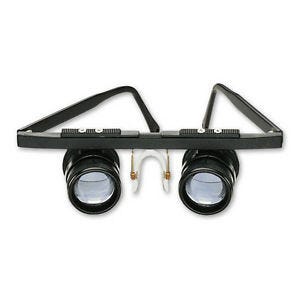
Instead, I was launched into a lengthy, almost theatrical sales pitch. Telescopes. Virtual reality headsets. Devices that could, in her words, help me see again. I tried to explain, politely and repeatedly, that these were not things I wanted or needed. I do not actually enjoy relying on my vision in the ways she was proposing. She could not understand.
She kept escalating. She talked about watching television. I explained that my eyes fatigue easily, and while I enjoy visual media, audio description meets my needs far better. Improved TV viewing was not why I was there. So she raised the stakes.
“Don’t you want to see your daughter’s face?” she asked. “It must break your heart not to.”
Ouch.
Of course it breaks my heart. Of course I grieve what I miss. I want to absorb every detail of who my daughter is, always. And also, screw you. Screw you for weaponizing my grief as a sales tactic. Your technology cannot reverse my vision loss. It cannot give me access to my daughter in the way you are implying. And beneath the question, Don’t you want to see her face?, lurks a judgment even crueler: the suggestion that by not wanting what you are offering, I am somehow loving her less. Trying less. Failing her as a parent. As if my refusal to contort my body around your tools were evidence of indifference, resignation, or moral lack.
This is not just about one provider. She acted within a system that routinely treats disabled parents’ choices as tests of moral worth. Her insistence that I “try everything” was shaped by ableist parenting norms and what feminist scholars describe as good mother ideology, , where a mother’s value is measured by her willingness to sacrifice her body, comfort, and autonomy in pursuit of an imagined ideal. In this context, grief, fear, and imagined loss are mobilized to compel compliance, and refusal of treatment is subtly reframed as a refusal of love, responsibility, or moral goodness. Care ceases to be collaborative, and medical authority is wielded not just over bodies, but over identities and over what it means to be a loving parent.
During this appointment, I tried. I strive to be a good patient. I am open-minded, agreeable, and willing. I gave every tool she suggested a chance. None of it worked for me. These tools allow you to see only a tiny sliver of the visual field, like zooming in so far that you can see one inch of a TV screen while losing the entire picture. The extreme magnification made me nauseated. I became motion sick trying to orient myself.

I have been here before. I have been promised benefits from monoculars, binoculars, and countless devices. I wish they worked. I really do. But they rely on a false premise: that the best or only way for me to access the world is through vision. This is the assumption of sighted people. That meaning, connection, and participation derive primarily through sight. That has not been my experience.
Much of medicine operates under an unspoken belief, known as the medical model of disability, that disability represents a deviation from normalcy that must be corrected, rather than a form of human variation that requires accommodation. Under this model, success is measured by how closely a patient can approximate nondisabled functioning, not by whether their actual needs are met or whether their participation in the world is meaningfully supported.
I explained, repeatedly, that I prefer audiobooks and text to speech because they allow my eyes to rest. My eyes are exhausted most of the time from the strain of daily tasks. I do not want additional ways to rely on sight. Again, she could not understand. She expressed disappointment that I did not see the value of her tools.
What she could not recognize was a form of expertise I live with every day: knowing how my body works, what it can sustain, and what actually supports my life.
In the end, she did not even provide what I had come for. No updated glasses prescription. No contact lens evaluation, despite my explicit inquiry when booking the appointment. The false promises kept piling up. She remarked repeatedly on how surprised she was that I did not want to maximize my vision, that I did not want to try everything. She defended the misfit in what she could offer and what I needed by indicating that she usually works with people who have not been impaired as long or who have not adapted as much.
As if my adaptation were a failure.
In ableist frameworks, adaptation is often misread as surrender. Rehabilitation is framed as a linear march toward cure and normalization, while acceptance of difference is seen as suspect, premature, or morally inadequate. Learning to live well in a disabled body is mistaken for giving up, rather than recognized as a form of survival.
It haunted me to imagine her working with newly blind or visually impaired patients. People with less experience, less fortitude, less confidence to push back. For me, progress is not reading one more line on an eye chart. It is having more access to my life. It is being able to participate more fully, with less pain. When medicine defines progress as optimizing a single function rather than supporting how someone actually lives, it misunderstands the very purpose of help.
I am not saying it would not be incredible to read print visually again. I am saying that the tools meant to approximate that experience are not worth the cost for me, often literally and figuratively. They are physically taxing. Clunky. Destabilizing. They offer fragments instead of wholeness, like trying to make out a face one feature at a time, always a few moments behind, never fully capturing it no matter how hard you try.
Isn’t the mission of healthcare to meet patients where they are?
I felt less like I was in a clinic and more like I was sitting across from a salesperson. Maybe that sounds harsh. I know, as a clinician myself, how easy it is to conflate belief in a service with belief that it must be right for everyone. But this appointment was offensive, depressing, and deeply unhelpful. I am never going back.
Medical ableism does not require malice. It thrives in systems that confuse compliance with success, technology with access, and normalization with care. It thrives when refusal is read as failure, when disabled people are told, implicitly or explicitly, that loving others means trying harder to approximate nondisabled ideals. Until healthcare learns to value disabled people’s goals, our autonomy, our participation, our experience, it will continue mistaking harm for help.
This is such a compelling illustration of the insidiousness of the medical model, how it hides under the guises of meaning well and "trying everything." I hope this doctor reads this. ALL doctors should read this.