

My complicated relationship with AI
Access affordances, human costs, and lingering questions

If you’re anything like me, you are inundated with hot takes on AI daily, whether it’s in Substack posts, news pieces, or real-life conversations.
Like many, my relationship with AI has evolved.
I started off hating and fearing AI. I had flashbacks to reading Isaac Asimov in college and yearned for guardrails.
Behind closed doors, though, I played around with it a bit and realized what all the fuss was about. It started with search engine summaries and then became a great tool for increasing my work efficiency.
It was encouraged in my clinic as a way to make some of the more tedious parts of work, especially documentation, more manageable. My last job required me to spend nearly every minute of time at work with patients, so when was I supposed to get the documentation done? AI allowed me to do that work during my workday instead of after my daughter went to bed or in the dark hours before the sun came up. It seemed like a win to me. But I also wondered: was this really a choice, or was I using AI because the way we work had made the alternatives unsustainable?
And yet, I also suspected something was being lost.
We live in a capitalist society that mandates more and more productivity with less and less time.
So maybe AI could offer access. I have spoken with fellow faculty and students about how, in some ways, AI can even the playing field for students who are not native English speakers, for example. I absolutely think that’s worth taking seriously. I am all for increasing access and removing barriers. I wonder though, is AI removing barriers to participation, or is it helping us survive systems that were never designed to support us in the first place? When is AI creating opportunities for people to participate more fully, and when is it replacing what actually helps us learn and grow?
As someone with a disability, AI seems like it could offer so much promise for so many. Voice assistants can allow people with mobility impairments to interact with devices they may otherwise struggle to physically navigate. Automated captions can increase access for Deaf and hard-of-hearing people. Image descriptions can provide information about visual content for blind and low-vision people. The examples, and hope, go on and on.
For me, AI can eliminate typos and assist with punctuation that can be very tricky to master with my screen reader. Some of these tasks can be agonizing in both the time and tedium they require. AI can do them faster for me. Doesn’t that increase equity?
AI can do other things easily that I can’t. I can’t skim a document. That doesn’t really exist with screen readers. But AI can skim for me. It can also extract. For example, in my last academic manuscript, I gave AI my data output and asked it to pull out the values I needed. Finding and copying those values takes me an enormous amount of time. AI could do that tiresome labor for me much faster.
Despite the help, there are costs. It is well documented that AI reifies systems of oppression and can cause harm to people with disabilities (check out Rebekkah Taussig’s piece AI doesn’t have elbows).
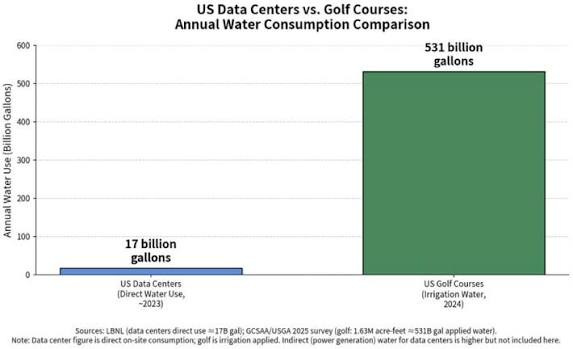
And, on top of perpetuating oppression, the infrastructure required to operate AI is ruining the planet. I don’t want to guzzle exorbitant amounts of water to remove my typos or skim statistical output faster, but doing those things another way takes way more time and energy. (Though fun fact that is not fun at all, golf courses use way more water than AI data centers. And people aren’t fussing about golf the same way).
It’s more than the environmental cost, though. And it’s more than the broader social costs. What about the personal cost? The human cost? What happens when we replace moments of human connection and insight with technology?
I absolutely adored Anne Helen Peterson’s piece (“Don’t Let Machines do the Living”) about how AI has now taken over tasks that are the very human parts of life that lead to mastery. There is something to be said about the slog. The slog is what leads to the payoff in the end. AI cannot learn for us.
But then again, I feel like I have enough slog already. Don’t we all?
So where do we draw the line?
I feel complicated about the landscape around AI and creation.

To be clear, I am not here to encourage AI slop. The amount of AI-generated content flooding our workplaces, art, and entertainment is horrifying.
But what is the line between AI slop and AI-assisted?
The commentary I keep coming across is that any reliance on AI in creation, for example, with writing like what I do here on this very Substack, is disgusting and reprehensible.
Sure enough, Substack just enabled a tool to determine how much of what you are reading was generated with AI. It inspired me to check some of my pieces. I was shocked at what I saw. There were pieces that I didn’t touch AI for that were deemed AI generated, and there were pieces that I used AI for that were deemed fully human. So the AI is not exactly stellar at detecting what is AI.
For what it’s worth, this piece is deemed 100% human.
More frustratingly, I find there is very little nuance in the conversation.
Has AI generated my work?
At some level, yes, I am using AI. At another level, it seems absolutely abhorrent to say my work is no longer human because I am using this assistance.
And don’t get me wrong. I am team human. I am also team effectiveness.
And for many people, including myself, there is a role for AI to make my writing more effective.
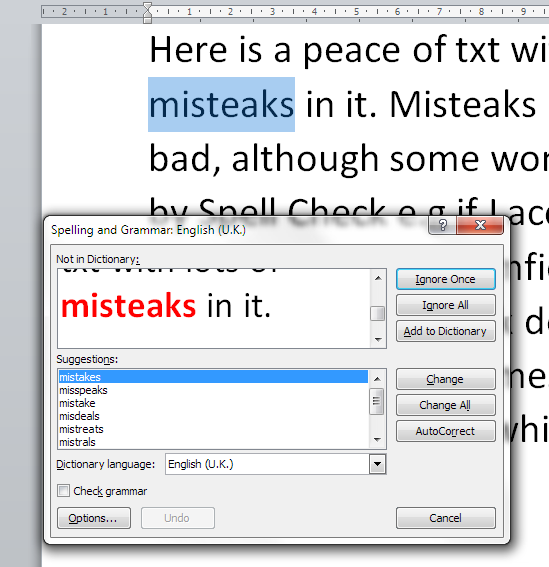
Although I was still pretty young when spellcheck was introduced, I have memories of older generations making snarky comments about how kids like me would never learn how to spell. While there may have been a dip in spelling skills (I honestly don’t know the data on this), I also think having spellcheck improve my spelling doesn’t “ruin” my literacy so much as it improves my ability to communicate what I want to without distractions. Spellcheck was kind of baby AI, wasn’t it? It was the computer fixing things for us. To my knowledge, no one is rioting against spellcheck.
Searching with Google raised similar fears; we would never remember anything if we didn’t have to look things up in an encyclopedia. Have our memories suffered? Potentially. Are we okay with it? Also yes, seemingly.
Obviously it gets a lot more complicated when looking at the use of AI in applications like surgery, but for basic typos, spelling, and grammar, I think I’m ok outsourcing those skills. For a deep dive on this, check out this podcast Speaking of Psychology episode on how the use of AI involves “de-skilling.”
AI can do things for me that enable me to rely less on humans. On the one hand, that’s “increasing independence,” right? I’ve written a lot about the harms of glorifying independence, so it is probably unsurprising that I think there is a cost. I am missing out on moments of human connection.
I think about how I used to rely on humans for assistance with tasks like managing references in papers and grants. Now I have AI-adjacent tools like Zotero. That is absolutely more efficient. It is also less collaborative.
What I really wish were the case was that we had the social infrastructure (ahem, dismantling capitalism) that allowed human support to be viable. Human assistance deserves to be socially valued and well compensated, especially given the affordability crisis. Instead, AI fills gaps where human support is unavailable. People turn to AI therapists and chatbots because there simply aren’t enough therapists or enough opportunities for human connection.
We rely on AI not just because of the financial cost of relying on people but because of the emotional one. We fear burdening others, and so we turn to AI to avoid trauma dumping on friends. Asking another person for help requires vulnerability. We risk rejection, worry we’re asking too much, or wonder whether we’re being judged. AI asks nothing back. It doesn’t get tired or roll its eyes when we ask another question. Of course that’s appealing. Real relationships are scary: they involve reciprocity and risk. For another take on this, here’s a poem on the deeply human things we are outsourcing to AI.
Yesterday I caught myself ruminating about my latest and increasingly desperate attempts to help my son sleep through the night. My first instinct was to ask AI about night-weaning, but then I thought about the ideas circling around my brain tied to this piece. Instead, I texted a few mom friends. They didn’t synthesize dozens of studies or summarize every parenting website on the internet. What they offered was something AI couldn’t: validation, humor, and stories from their own experiences. And, perhaps most importantly, another opportunity to stay connected to people I love.
So people turn to AI because what choice do we have in a culture that applauds efficiency and independence above all else?
I want there to be a choice. And that means removing the pressures and creating the infrastructure that would actually enable that choice.
If I could hire someone to read my work and remove my typos, I would. Without more time and resources, though, that hasn’t felt feasible, so I use AI.
The problem is that AI can go rogue. The stakes are not as big as with the recent OpenAI debacles, yet it is still concerning. In my own work, I have observed that I ask for typos to be removed, but other things happen. Phrases are changed, sentences smoothed, and often I don’t even notice it.
As much as it is going against the zeitgeist, I want to choose humans when I can. But I also want to live in a world where choosing humans isn’t the harder choice. Because without enough time, resources, or easy access to human assistance, I do choose AI. And with that choice comes the nagging guilt that I am compromising on the type of world I want to live in.
P.S. I intentionally didn’t use AI to remove typos in this. So please forgive any unintended mistakes, extra spaces, or missing commas.