

Hope, not Optimism
Living in Uncertain Times

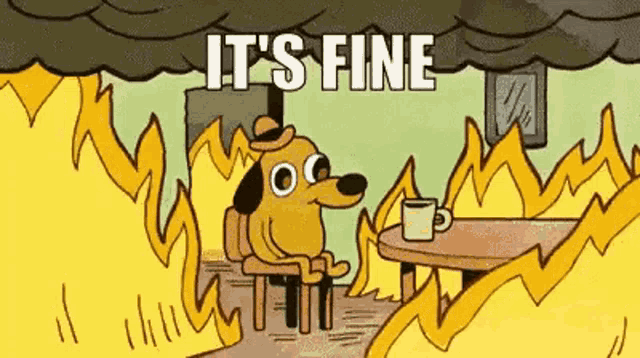
The world has felt terrifying for a while now.
War, human rights violations, climate crises, political theater dressed up as governance, the slow (and sometimes fast) burn of patriarchal nonsense, normalized cruelty. The headlines have felt increasingly hard to stomach: escalating conflict across regions, mounting civilian casualties, including children; political rhetoric edging toward large-scale violence; failed or stalled peace talks. And through it all, a kind of surreal spectacle, with public figures casting themselves in grandiose, almost parodic roles (Trump as Jesus. No, actually as a doctor. Seriously?). The list goes on, but the feeling is the same. What was already untenable somehow feels like it is intensifying.
It would be absurd if it were not so consequential.
Some days it feels as though everything is on fire. It can feel almost preposterous that we are expected to keep performing normalcy, answering emails, doing laundry, running errands , as if nothing is profoundly precarious.
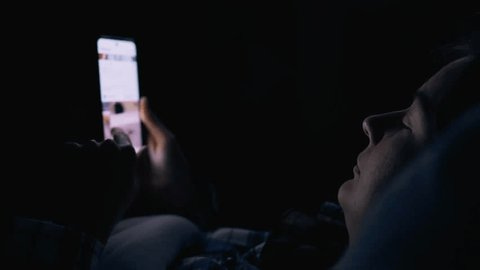
For me, that normalcy has included hours on my phone while breastfeeding. I generally try to limit my screen time, but the long stretches of nursing have pulled me back in. There is something deeply disorienting about nursing a baby while taking in news about war and political instability. My body is doing something intimate and life-sustaining while my attention is pulled outward toward devastation. I find myself moving between wanting to stay informed and needing distance, checking updates and then reaching for something else, an audiobook or TV show, anything absorbing enough to create a bit of space between me and what I am absorbing.
Sometimes it starts to feel like a moral question. Do I need to be paying closer attention, or is it necessary, even responsible, to look away? I am not always sure. What does it mean to mother in a moment like this?
So this is a strange time to write about hope. Or maybe it is the only time it makes sense to try.
In my clinical work, I spend a lot of time helping people make sense of the stories their minds tell them. From a cognitive behavioral perspective, that often means examining whether a thought is accurate, helpful, and complete. That word helpful matters. Not as a mandate for positivity, but as a question of whether a belief supports effective action in the direction of a life aligned with one’s values. Whether it opens up or constrains what feels possible to do, even if options are genuinely limited.
I think this can be easy to misunderstand. It is not about pretending everything is fine. It is not about insisting on optimism in the face of harm. If anything, the shift is often away from comfort and reassurance toward something closer to accuracy and usefulness.
Optimism is the expectation that things will work out. Hope is something else entirely. In psychology, hope is often described as involving both agency, the sense that our actions can matter, and pathways, the ability to imagine routes forward even when the original ones have collapsed. In that sense, hope is less a prediction and more a way of orienting to uncertainty that keeps action possible.
Hope does not require denying what is painful or threatening. If anything, it may depend on seeing those things clearly.
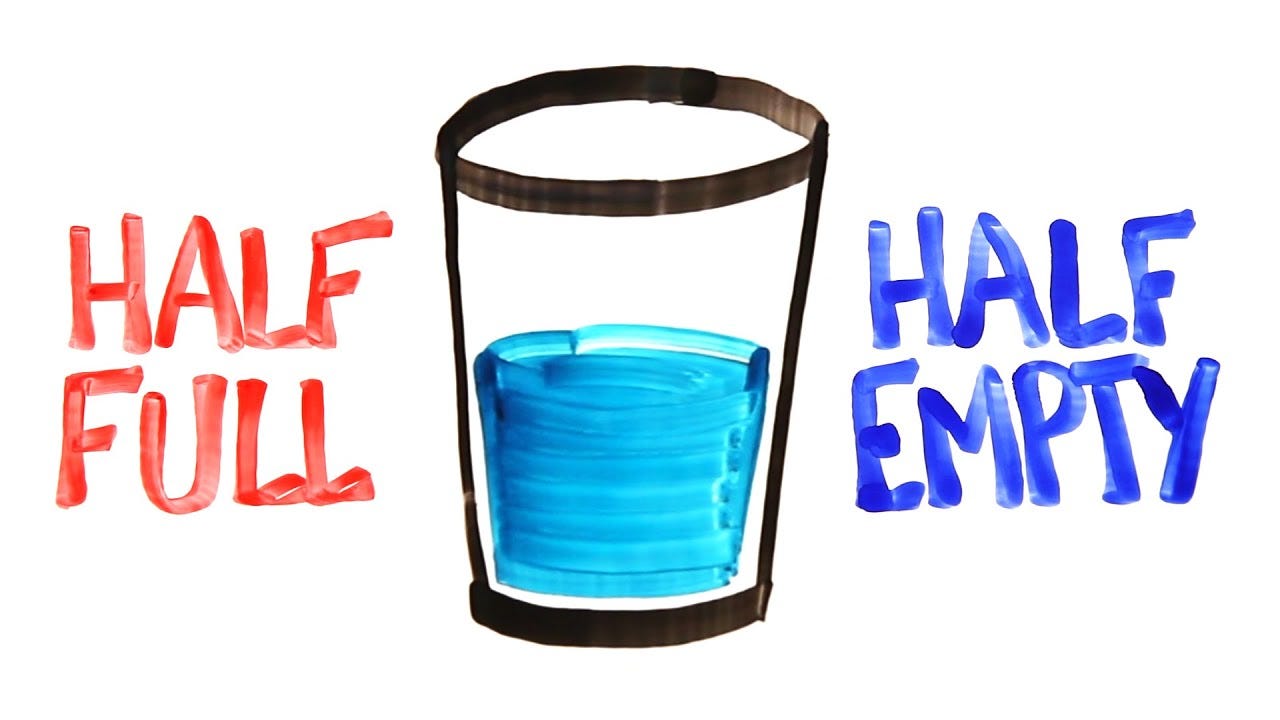
Optimism asks whether the glass is half full. Pessimism asks whether it is half empty. Hope asks whether what is in the glass can still be changed, and whether we can still act in ways that might affect that change.
I have noticed that hope is often prefaced with qualifiers: cautious hope, critical hope, suspicious hope. The qualifiers matter. They signal an attempt to distance hope from naïveté. And yet there is still, at times, a kind of cultural suspicion of hope itself, as though wanting it signals a failure to understand the severity of what we are facing.
There is no shortage of reasons for despair. I am not interested in talking anyone out of what they feel. What I find myself returning to instead is the difference between feeling hopeless and holding the belief that nothing will change. One is an emotional state. The other can begin to harden into a worldview that shapes what feels possible to do next.
This is where helpful belief starts to matter. Not only hopeful belief, but beliefs about possibility, agency, and pathways that support effective action. From a cognitive behavioral perspective, we do not need to feel hopeful in order to act. We can act in the presence of fear, grief, anger, or despair. Much of clinical work involves helping people take meaningful action without waiting for internal states to align first, learning to act in accordance with values rather than being guided only by thoughts or emotions.
And still, beliefs and emotions shape what action feels available. Hope, as both a feeling and a way of thinking, can widen the sense of what is possible or worth attempting. Hopelessness, by contrast, often narrows that field into fixed conclusions. Nothing will change. Nothing I do will matter. And from there, action becomes harder to initiate and sustain.
So hope is not a prerequisite for action, but it can make action more available. It is not fully separable from behavior because it is part of what makes behavior feel possible or out of reach. This might look different depending on the context, whether it’s organizing, caregiving, showing up in community, or simply continuing to pay attention without becoming immobilized. But the underlying questions are the same: what can I do? What change is possible?
This has also been concrete in my life as a disabled person.
For years, people have offered a kind of optimistic reassurance that with enough scientific advancement there may one day be a cure for my eye condition. I understand where that comes from. It is often an attempt at comfort. But as far as I understand the current state of the evidence, innovations are unlikely to substantially alter the course of my condition within my lifetime.
Plus, I do not need the promise of a cure in order to live a full or meaningful life. In fact, the assumption that I would require one reflects a broader ableist logic, that a disabled life is only acceptable insofar as it is eventually repaired or rehabilitated. I am not waiting for a future in which I am “fixed” in order to be satisfied with my life.
My life is not suspended in anticipation of mending. I am trying, albeit imperfectly, to learn instead how to live fully in a body whose future is uncertain, within systems that too often treat disability as something to eliminate rather than something to accommodate, support, and design for.
Sometimes people hear that as pessimism. I experience it, at least most of the time, as a form of accuracy, and as a shift in what I understand hope to be for. My hope is not that everything will be cured. It is that things can improve in ways that matter for disabled people now. That research can expand quality of life rather than only pursue eradication. That accessibility can widen. That environments and technologies can be designed from the outset with disabled lives in mind. That collective effort can reduce barriers and burden. I also find myself hoping, more concretely, for the continued improvement of everyday tools like text-to-speech, magnification, and dictation, small shifts that meaningfully shape access and autonomy. In that sense, this version of hope is not just more accurate for me, it is more useful. It directs my attention toward what I can do, rather than toward what I am waiting for.
My hope is grounded in access and livability, not in the removal of disability. It is a hope rooted in what is already in motion, not in outcomes that require certain bodies to be different in order to be valued.
I have been thinking about all of this as a parent. Choosing to become a parent is, in its own way, a profound act of hope. Or at least, it has felt that way to me.
The transition into motherhood, termed matrescence and described as a kind of developmental upheaval, is not just a change in role but a reorganization of the self. It is hormonal, psychological, and social, something closer to adolescence in its intensity. It can be disorienting, marked by identity shifts and emotional volatility. And for many, it sharpens a particular kind of fear, an acute awareness of the world a child will inherit. Caring for a child can pull attention outward, toward a more relational and ecological sense of interdependence, and with it, a heightened awareness of what is at stake.
Loving a child does not insulate us from our broader social and political context. If anything, it can amplify our awareness of it. At least, that has been my experience.
I understand why many people are choosing not to have children given the state of the world. I am not here to argue with that. For me, choosing to have children was not a belief that things would work out. It was a decision to relate to the future as open, or at least not fully determined.
Children alone are not evidence that things will improve. History cannot offer such assurances. Progress is not linear.
Hope is not simply internal. It is shaped by social conditions and systems of power. Who gets to feel hope, and whose hope is made harder to sustain or even rendered suspect, is impacted by whiteness, financial security, citizenship, disability, and the kinds of bodies we inhabit and how those bodies are viewed, accommodated, or excluded. Some people are given far more material and social ground for hope than others. For others, hope is actively undermined by ongoing exposure to constraint, violence, or scarcity. I want to name that my own relationship to hope is shaped by privilege, including whiteness, education, and financial stability, which afford me more room to imagine that things might shift and that my actions might matter. Any honest account of hope, I think, has to hold both the psychological experience of it and the unequal conditions that shape it.
Still, in moments of parenting, I find myself returning to something like possibility. I see it in the way my daughter notices when someone is upset, in her determination to help, in the way she tries again when something does not work the first time. These feel like small, everyday signs that children may be growing up with more emotional awareness and skillfulness than we sometimes assume. There is something profound in watching a person become, before the world has taught them resignation.
To be clear, I am not consistently hopeful. Some days, hope feels less like an emotion and more like a practice of holding certain beliefs lightly but intentionally. A way of staying with what is true without collapsing it into inevitability. A way of continuing to choose actions that feel aligned with my values, even when outcomes are uncertain.
Grief is real. Danger is real. What we are living through warrants fear and mourning. Hope does not ask me to deny that. It asks something else: to leave room for the possibility that what is broken is not yet final, and to keep acting as if change is still possible.
The world remains frightening. And still, I am trying to leave room for the possibility that it may still be changed, because I do not know how to keep parenting or keep moving forward without that.