

Fast and Slow
On the Elasticity of Time in Parenting and Disability

One of my daughter’s favorite books, at least sometimes, is a simple board book called Hello Hello Opposites. It moves through pairs: big and small, loud and quiet, wet and dry.
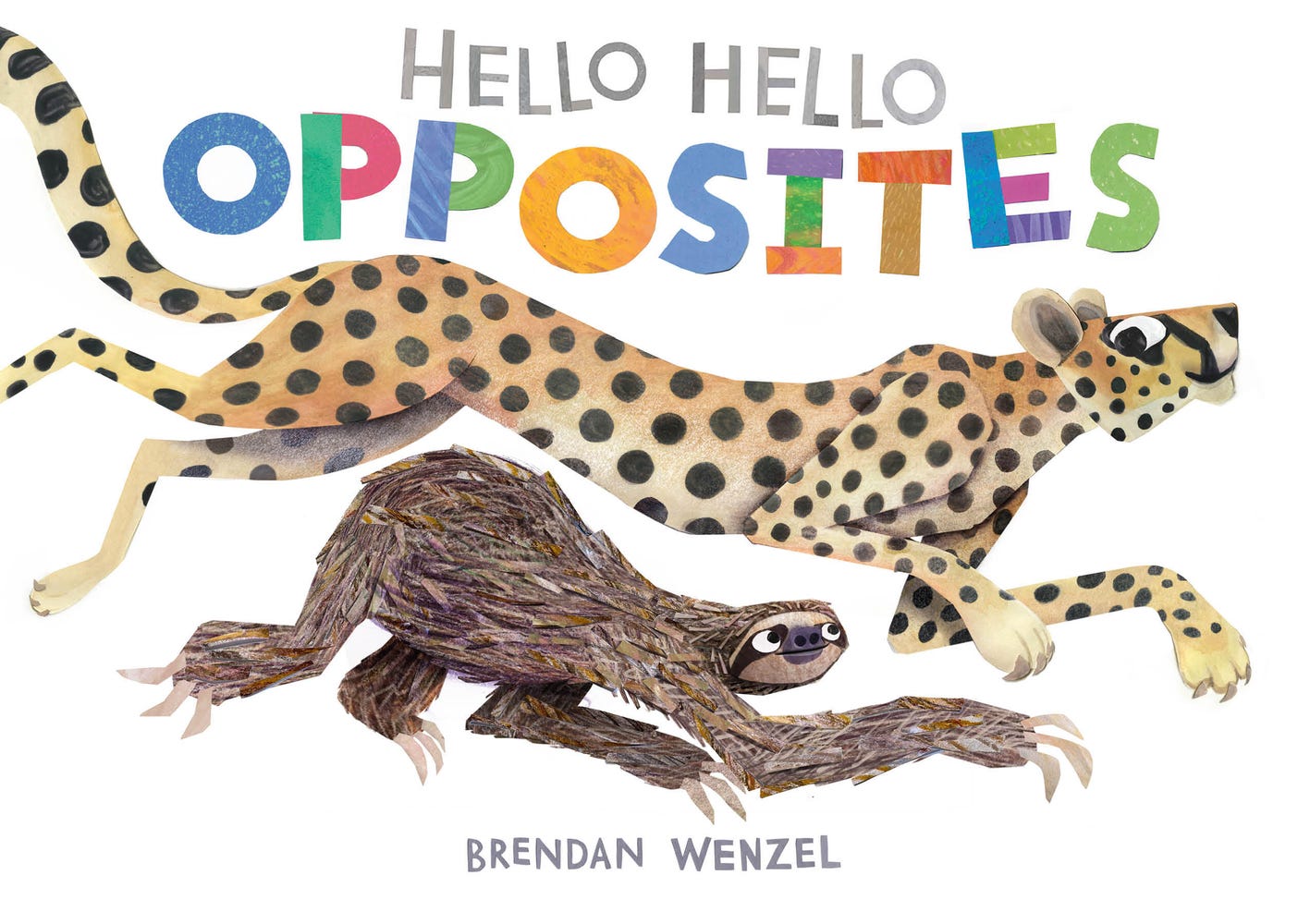
The pair she latched onto first was fast and slow.
For a while, everything in our house was either fast or slow. Walk fast, walk slow. Talk fast, talk slow. Sing fast, then slow. You get the idea. This began when she was about a year and a half, so the distinctions were flexible. “Fast” was not always very fast. “Slow” was not always very slow. But she delighted in the contrast anyway.
Initially, it felt like just another toddler game.
Lately, I keep returning to those words and how much they depend on perspective. Fast compared to what? Slow compared to what?
Time has felt strange lately.
Now that I am home with a newborn again, I feel time’s elasticity constantly. The middle-of-the-night feedings stretch endlessly. Minutes move with stubborn resistance when all I want is more sleep. And yet the nap-trap snuggles feel impossibly short. This tiny body on my chest, soft and smush-faced, emitting snorts, sighs, and grunts. I know I should move, but I can’t.
There is also a broader disorientation. It looks like I am doing very little. I am not working. I am not leaving the house much. My calendar is mostly empty. And yet it feels like I am doing everything. Feeding. Changing. Cleaning. Repeating. Each task small but relentless. The day fills and empties at the same time. I am both busy and not busy. Moving constantly and somehow not moving at all.
Sometimes being present feels hard. The slow stretches feel heavy. Sometimes distraction is what gets me through (thank you to Abby Jimenez novels, and to Shrinking, Survivor, and The Pitt). Sometimes paying attention makes things feel sharper. I think about the day I missed daycare drop-off because of a feeding, and my daughter said, “I miss you.” Moments like that make the fast parts feel way too fast, like sand slipping through my fingers.
Then I look at my toddler.
I cannot believe how grown up she seems next to her newborn brother. Her sentences are longer and more complex. Her questions are sharper. She runs faster, climbs higher, and moves through the world with more intention. Lately she has been fixated on buttoning her sweater and folding napkins just so, small signs of her growing independence.
And yet when I try to account for the time, it feels like she arrived only moments ago. Like we blinked and she became a whole person. It also feels as if she has been here much longer than her years, as if she has always been part of us.
Parenting does strange things to time.
I think disability does too.
Waiting for accessible technology, transportation that actually works, or accommodations that should have been there all along can feel painfully slow. Time becomes heavy, bureaucratic, and sticky. I think about the many times I’ve been at an office counter, frustratedly filling out forms while people stood behind me. I hold a magnifier over the page, listen to text read aloud, and try to line up my handwritten responses. Every step taking longer than it should. Every glance making that slowness more visible.
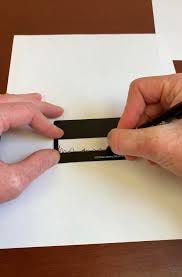
For years I wished for a simple way to meet that did not require navigating often inaccessible transportation. Then the pandemic happened. It felt like overnight, Zoom became ubiquitous. Meetings, appointments, and entire ways of working and connecting shifted. Documents that once required an in-person handoff suddenly arrived by email. Forms that used to demand a physical signature moved onto DocuSign and other remote platforms. Materials once reserved for the office were now shared digitally, sent ahead, signed from home, completed without the choreography of travel and cumbersome assistive tools. Something I had hoped for for so long arrived quickly, sparked by something wholly unexpected. The wait was slow. The change was fast.
There is a concept in disability communities called crip time. It names the way time bends around bodies, barriers, and access. It does not move in a straight line. It stretches, stalls, and speeds up in ways that do not match the clock.
There are also moments of connection, both within and beyond the disability community, when my needs are seen without explanation. Someone subtly guiding me or pointing out what I cannot see. Accommodating my needs without making it a thing. These moments are brief, easy to miss, but in them my identity and dignity feel intact. They pass quickly, and yet they stay with me.
Time is also used as a way to make disability feel safer. Many assume disability belongs later in life. I cannot count the number of times I have been told, “You are too young to be blind.” As if disability only makes sense in older adults. At the same time, when someone older uses a walker or magnifier, it is often explained away as aging, rather than being defined as disability. Time becomes a kind of buffer, something we use to create distance from what feels uncertain or scary.
And still, time moves.
Fast.
Slow.
Both true.
Full disclosure, I am writing this in a state of sleep deprivation. I do not have the energy to tie all of this into a pretty bow. But the thoughts keep circling, so I will offer them in their tangled thready form.
We want to slow the fast parts. Hold onto them. Make them last. And we want to speed up the slow parts. Get through them. Skip ahead.
Noticing does not solve this. Sometimes it makes it more acute. It can sharpen the sense that something is fleeting.
Still I think noticing is the way.
Because the alternative is to miss it entirely.
The fast moments, the ones everyone warns you about in parenting, it goes so fast, that phrase is a cliché for a reason. It does go fast.
There is a widely shared poem about the “lasts” of parenting that reliably makes me cry. We never know when a last is happening. That is part of what makes it painful.
The Last Time
From the moment you hold your baby in your arms, you will never be the same.
You might long for the person you were before,
when you had freedom and time and nothing in particular to worry about.
You will know tiredness like you never knew it before
and days will run into days that are exactly the same:
Full of feedings and burping, nappy changes and crying,
whining and fighting, naps or lack of naps
It might seem like a never-ending cycle.But don’t forget…
There is a last time for everything.
They will fall asleep on you after a long day, and it will be the last time you ever hold your sleeping child.
One day you will carry them on your hip then set them down and never pick them up that way again.
You will scrub their hair in the bath at night and from that day on they will want to bathe alone.
They will hold your hand to cross the road then never reach for it again.
They will creep into your room at midnight for cuddles
and it will be the last night you ever wake to this.
One afternoon you will sing “The Wheels on the Bus” and do all the actions then never sing them that song again.
They will kiss you goodbye at the school gate then the next day they will ask to walk to the gate alone.
You will read a final bedtime story and wipe your last dirty face.
They will run to you with arms raised for the very last time.The thing is, you won’t even know it’s the last time
until there are no more times… and even then, it will take you a while to realize.So while you are living in these times, remember there are only so many of them and when they are gone, you will yearn for just one more day of them.
For one last time.
Alongside the lasts, there are the firsts.
I think of a video I saw years ago, now lost to the TikTok abyss, where a mother described how every stage of her daughter’s life became her new favorite. First when she was born. Then when she started to really look at her, more alert, more aware. Then crawling, walking, talking, asking questions, becoming her own person. Not because one stage was better than the last, but because each one was new. Each one revealed more of who her daughter was becoming.
Granted my eldest is only two and a half, so this may shift as she grows, and as I do too. But right now, each stage is my favorite. Not because it is inherently better or easier, but because it reveals more of her. And I love it all.
Maybe this is how we hold it: not by choosing between fast and slow, joy and grief, or the lasts and the firsts, but by letting them be, side by side.
I also reflect on how the pace of time changes across the lifespan. When we are young, days can feel endless. Seasons seem to last forever. A year is such a large proportion of the life we have lived that time stretches wide around us. As we age, it often seems to do the opposite. The months blur. Seasons turn before we are ready. There is a particular cruelty here, because the older we get, the more aware we are of time’s finitude. Just as we begin to understand how fleeting it all is, time seems to gather speed. Maybe that is part of why we cling harder, especially in parenting, wanting to hold onto stages we once might have rushed through.
The goal is not to control the pace. I don’t think we can.
Maybe the goal is to stay with it when we are able, and to look away when we need to, and to return again.
Fast and slow.
One day, undoubtedly before I’m ready, my daughter will move on from this phase. The book will rotate out. Something else will take its place.
I now believe she was not simplifying things. Instead I think she was brilliantly naming something true.
Life is both, fast and slow.
Not sure if you're familiar with the poem "Poem 070: Sentimental Moment or Why Did the Baguette Cross the Road?" by Robert Hershon, but I tear up every time I read it (very similar sentiment to the one you shared): https://www.loc.gov/programs/poetry-and-literature/poet-laureate/poet-laureate-projects/poetry-180/all-poems/item/poetry-180-070/sentimental-moment-or-why-did-the-baguette-cross-the-road/